
Cybersecurity for Managers: A Guide to Protecting Your Organization
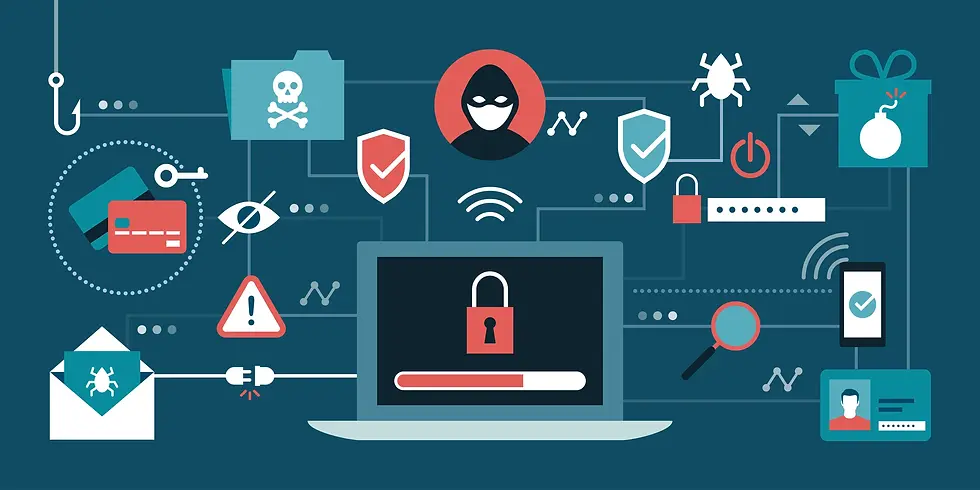
Organizations are constantly under attack from cybercriminals. It is important for managers to understand the current threat landscape and take steps to protect their organizations from cyberattacks.
The current threat landscape
The threat landscape is constantly evolving. Cybercriminals are becoming more sophisticated and their attacks are becoming more targeted. The top 10 most common types of cyberattacks include:
Phishing attacks: These attacks involve sending emails that appear to be from a legitimate source, such as a bank or credit card company. The emails often contain links or attachments that, when clicked, install malware on the victim's computer.
Malware attacks: Malware is software that is designed to harm a computer system. Malware can be installed on a computer through a variety of ways, such as clicking on a malicious link, opening an infected attachment, or downloading a file from an untrusted source.
Data breaches: A data breach is an incident in which sensitive data is exposed to unauthorized individuals. Data breaches can occur through a variety of ways, such as hacking, phishing, or insider threats.
Ransomware: Ransomware is a type of malware that encrypts a victim's files and demands a ransom payment in order to decrypt them. Ransomware attacks are becoming increasingly common, and they can be especially devastating for small businesses. If a small business is unable to pay the ransom, they may lose all of their data, which can put them out of business.
Social Engineering: Social engineering attacks are attacks that rely on human interaction to trick victims into giving up sensitive information or taking actions that harm their computer systems. Social engineering attacks can be very effective, even against experienced computer users.
Zero Day attacks: A zero-day attack is an attack that exploits a vulnerability in software that the software vendor is not aware of. Zero-day attacks are very difficult to defend against, because there is no patch available to fix the vulnerability.
Supply Chain attacks: A supply chain attack is an attack that targets a third-party supplier of a small business. By targeting the supplier, the attacker can gain access to the small business's systems and data.
Insider threats: An insider threat is a threat that comes from within a small business. Insider threats can be caused by malicious employees or by accidental data breaches.
DDOS attacks: A DDoS attack is an attack that floods a website or server with traffic, making it unavailable to legitimate users. DDoS attacks can be very disruptive, and they can have a significant impact on a small business's bottom line.
iOT attacks: IoT attacks are attacks that target Internet of Things (IoT) devices. IoT devices are becoming increasingly common, and they are often not properly secured. This makes them vulnerable to attack.
The NIST framework
The National Institute of Standards and Technology (NIST) has developed a framework for cybersecurity called the Cybersecurity Framework. The NIST framework is a set of best practices that organizations can use to improve their cybersecurity posture. The framework includes five components:
Identify: Identify the assets that need to be protected and the threats that those assets face.
Protect: Implement controls to protect the assets from threats.
Detect: Detect security incidents so that they can be responded to quickly.
Respond: Respond to security incidents to minimize the damage.
Recover: Recover from security incidents so that operations can resume as quickly as possible.
Risk measurement
It is important for organizations to measure the risk of cyberattacks. Risk measurement involves identifying the assets that need to be protected, the threats that those assets face, and the likelihood and impact of those threats. Once the risk has been measured, organizations can prioritize their security efforts and allocate resources accordingly.
Defensive actions
There are a number of defensive actions that organizations can take to protect themselves from cyberattacks. These actions include:
Implementing security controls: Security controls are measures that are put in place to protect an organization's assets from threats. Security controls can include things like firewalls, intrusion detection systems, and antivirus software.
Educating employees: Employees are often the weakest link in an organization's security posture. It is important to educate employees about cybersecurity risks and how to protect themselves from cyberattacks.
Monitoring for threats: Organizations should monitor their systems for threats. This can be done through a variety of methods, such as using security information and event management (SIEM) tools.
Cybersecurity is a complex issue, but it is one that is essential for businesses of all sizes. By understanding the current threat landscape, implementing the NIST framework, measuring risk, taking defensive actions, and considering ethical implications, organizations can protect themselves from cyberattacks and mitigate the damage that can be caused by these attacks.

Comments